EU Tyre Labelling
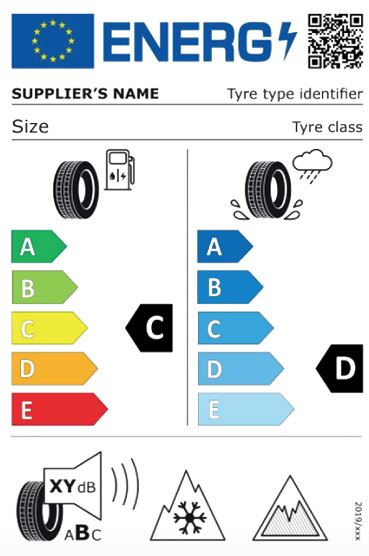
EU Tyre Labelling - What is it?From 1st November 2012 all car, van and 4x4 tyres in the EU must display a special tyre label by law. This label will give information on three areas: fuel efficiency, wet braking performance and exterior noise emissions to help give you more information when purchasing new tyres. What do the labels look like?You might be familiar with the labels already as they are similar to the labels you find on domestic appliances such as fridge freezers and washing machines giving an energy rating. The label rates three specific areas:
|
|
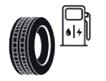
1 - Fuel Efficiency

The tyres will have a rating for fuel efficiency from A – G; A-rated tyres being the most fuel efficient and G-rated tyres being the least fuel efficient.
Choosing more fuel efficient tyres not only lowers the cost of driving as you use less fuel, but also reduces Carbon Dioxide emissions which in turn helps the environment.
By choosing to fit A-rated tyres over G-rated tyres, you will save an average of 7.5% in fuel a year. (Please note D ratings are not used).
Tell me more
Tyres are responsible for approximately 20% of the fuel used by your vehicle, mainly due to something called rolling resistance. Rolling resistance is caused by the friction of the tyre hitting the road. It differs from tyre to tyre depending on how the tyre has been designed and what it’s made from. By choosing tyres with reduced rolling resistance, you will lower the energy used and therefore cut down on your fuel consumption – saving you money.
The new label means that you will be able to compare tyres according to their fuel efficiency. For example, if you choose tyres which are A-rated instead of F-rated, you could save an average of 80 litres per year which mounts up to over £110 worth of savings (based on a petrol engine driving 10,000 miles annually with fuel costing £1.40 a litre).
Reducing rolling resistance and therefore fuel usage also cuts down on Carbon Dioxide emissions being released into the atmosphere which benefits the environment too.
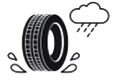
2 - Wet Grip & Braking Distances

The second area rated by the new tyre label is wet braking distances e.g. how long it takes a tyre to stop when braking in wet weather.
Tyres are rated from A – G (however D and F ratings are not used). Choosing A-rated tyres over F-rated tyres could reduce wet braking distances by up to 18 metres.
Tell me more
Tyres take longer to stop in wet conditions and tyre manufacturers invest a great deal of resources into designing new tyre patterns which reduce aquaplaning and shorten braking distances in the wet. The new labels will allow you to compare stopping distances from tyre to tyre.
The difference between each rating is around 3 – 6 metres so by choosing A-rated tyres compared to F-rated tyres, your braking distances in the wet could be cut by more than 18 metres – that’s 4 car lengths or 8 smart cars – which could make a considerable distance when braking. (Based on braking from 50mph in wet conditions).
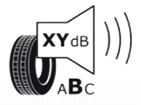
3 - External Noise

The final rating is external noise emissions. This is not the noise heard by the driver, but external noise made by the tyre. This is measured in decibels (dB) and is indicated by one, two or three black waves on the label; with one wave being the quietest to three waves being the loudest. So the more black waves, the louder the tyre.
Tell me more about Noise Efficient Tyres
Traffic noise is a major source of nuisance and new legislation coming into force in the next few years will see much stricter rules on noise. The three waves on the tyre label will allow you to compare noise levels and also ensure you meet with the new legislation.
One wave – the tyre meets current legislation and is at least 3dB below the new rules on noise (coming into force from 2012 - 2016).
Two waves – the tyre meets both current and new legislation on noise.
Three waves – the tyre meets current legislation only.
Why are these labels being introduced?
The new EU labels are being introduced to give you as a consumer more information before buying tyres, to help you make a more informed choice based on the above criteria. It will also promote safer tyres and help lower the cost of driving as motorists can clearly see which tyres will benefit them in these areas.
Does it apply to all tyres?
All standard passenger car, van and 4x4 tyres– which means all tyres sold by Tyre Shopper will be covered by the new tyre labelling laws.
There are some exceptions which include: tyres being used for racing, professional off-road tyres, re-treaded tyres, vintage tyres, tyres manufactured before 1990, spare tyres, studded tyres and tyres with a speed rating of less than 80km/h. Motorcycle tyres are also excluded from the regulations.
Can I compare tyres whatever brand they are?
The labels are standardised, so it doesn’t matter whether it’s a Continental, Michelin or Tigar tyre so you can compare them like-for-like in the 3 categories.
Responsibilities
From July 2012, tyre manufacturers will be required to ensure that the new label appears on all tyres manufactured from this time onwards, and that the tyres are graded through a self-certification process.
As a tyre distributor, Tyre Shopper will be responsible for ensuring that the new tyre labelling information is available to all customers to help them during the buying process. We will do this by providing the three ratings for each and every tyre being sold on our site. We also provide this simple guide explaining what the labels look like and what the information means for you.
Your customer receipt / invoice will also contain the tyre labelling information, including the three ratings for fuel efficiency, wet grip and noise.
For customers with any further questions, please contact our telesales team on 0800 731 0134 who will be able to give you more information about tyre labelling. Alternatively, click on the chat icon below to receive a response in seconds from one of our online advisors.
In summary:
From November 2012 all new tyres sold will have the new EU tyre labels to help you make the right choice when buying tyres.
As a tyre distributor Tyre Shopper is responsible for ensuring this information is provided and explained to you throughout the buying process.
At Tyre Shopper all tyres listed on our website will include the details contained on the tyre label so even though you are buying online, the tyre labelling information will be available to you to help you make an informed choice.
Our trained advisor's will be able to provide further details if required. Customer receipts / invoices will contain the values for the three categories as well.
Related articles:
This article is written by expert Chris J Dutton who has 17 years industry experience and writes news, content and press releases. If you would like to make contact with Chris then you can do so at Email and also see Chris's Google+ profile or contact customer services for any other query.